Vision and blindspots

Over the next few weeks, I want to reflect on some of the professional strengths and professional challenges I have identified over the past few years of leadership. These strengths and challenges are informed by both my experiences and several standardized assessments (Myers-Briggs, DiSC, etc.).

Strength – Visionary & Innovative Creativity

This is a strength that I would not have recognized myself without multiple assessments identifying a similar pattern. I had never thought of myself as creative, and certainly not in a way that might be connected to leadership. Several years ago, when I conducted these assessments as part of the PTC programme, I began to recognise both the opportunity for creativity and my own ability to think creatively. I was lucky to have a role in a school that allowed me to develop this further, and it became beneficial as I moved into formal leadership roles and was specifically tasked with solving issues that required a creative approach. Reflecting on most of my career, the opportunity for creativity has been a consistent theme, whether through piloting a new model of curriculum framework, developing teaching and learning experiences, or working with whole school committees navigating change. I have been fortunate to unintentionally develop and refine this skill set throughout my career.

Challenges – Communicating Vision & Building Rapport

As a teacher and middle leader, there are very few opportunities to develop communication of a vision. One area in which I consistently tried to do this and achieved success was with parents during open house events, communicating the importance and value of Physical health education. It was through these conversations that I was able to practice and refine a vision for the subject that would resonate with a diverse audience. As a middle leader, this becomes more challenging when you take on a role where you must communicate and support the school’s vision to ensure your team can move forward, but also work towards developing a shared vision for that particular group. I was able to practice this as a grade-level leader, but it was often challenging and would more often than not lead to conflict around which to prioritize, the school’s or team’s vision. In hindsight, I was too focused on the vision of the wider organization. I did not spend enough time working with the team to build the rapport necessary to understand the multiple perspectives informing the team’s vision.

At my current school, I keep the mission and vision of the organization at the centre of my work. This includes intentionally embedding these into systems, processes, and procedures. My role is highly operational and not focused on developing larger strategic work. I am fortunate to be included in many strategic discussions and enjoy that work immensely.

Moving forward, one of my professional goals through enrolling in the EMBA programme is to develop and refine the skills needed to communicate the larger vision through operational pieces. For example, through our work with the middle school timetable, we can operationalize the core beliefs of our organisation, ensuring that the systems we implement reflect what we believe.


Push and pull

As a leader, striking a balance between push and pull is essential. Leadership demands flexibility: what works in one situation may not in another, so an effective leader must adapt their approach based on what the moment and organization requires.

Many leadership models—and many “gurus”—emphasize a “pull” story of leadership. Emphasizing the need to create buy-in through collaboration, inviting input, building shared vision. These are powerful tools. I believe in them and have had career-changing experiences both working with leaders applying these theories as well as using them myself. But they are not sufficient on their own.

There are times when people need a push. When complacency or stagnation are setting in, when moving forward feels impossible, a directive nudge is necessary. Though push (directive) styles risk appearing authoritarian, they are a necessary part of the leader’s toolkit—especially when strategic goals demand urgency. One of the most common errors I’ve seen in my career is leaders who rely too much on pull alone, even when the context calls for push. Such overreliance leads to frustration, low morale, and disengagement—not always from those who lag, but from those who want to move forward and feel held back by a perceived lack of leadership.

Push becomes especially necessary when change must happen fast. Think of a new leader entering an organization, trying to realign practices or reset expectations. In those “first 90 days,” you need early wins. You need clarity. You need visible shifts. When the vision is clear, when some colleagues are already on board, when momentum can be built, a push at the right time and in the right direction can reset the pace. But push doesn’t mean abandoning support; it means being explicit: this is how we are working now, this is how we are progressing. You give people every resource to succeed, but also make clear where change is non-negotiable.

An example of push style leadership I came across while developing my thinking comes from a video from HBR focused on “Commander’s Intent”. The framework is that it is the leader’s responsibility to define why the work matters, outline what needs to be done, and, most importantly, what the outcome should look like. What I appreciate about this model is that there is no explicit mention of how; this crucial piece is left to the members who need to move forward. The idea of providing a push into action through giving clear direction, support and the expectation of initiative.

By contrast, pull is what you lean into for long-term strategy and deep cultural change. It’s what builds commitment when the stakes are sustained over years, not weeks. It’s how you engage others so they feel ownership of the path forward. Pull nurtures trust, creativity, and alignment, especially when the direction isn’t crystal clear or when people need to bring in their ideas and expertise.

For either mode to work well, a leader needs a clear vision and, crucially, self-awareness. You must be able to sense whether the situation calls for push or for pull, or both. Push used too much undermines sustainability and alienates people; pull used too much when urgency is needed results in drift. Leadership lies not in choosing one style, but in being able to shift between them, applying both effectively.

Leadership isn’t about being consistently gentle or always forceful—it’s about being present in the moment, reading the room, and leading in a way that matches both the needs of the people and the urgency of the purpose. As developing leaders, we must prepare to take on new challenges and intentionally practice this balancing act. Pay attention to the times when you pull people along and when you push them forward. The key to developing as an organizational leader often comes down to learning when to pull and when to push, and doing both with integrity, clarity, and care.


Next steps – the calm of coming to terms with a way forward

Over the past year, I have spent a lot of time thinking about my role, my strengths, my challenges and where I see my career going. The start of my leadership roles, senior leadership anyway, was only ever half-formed. I wasn’t able to see myself fully in the role because I was split between multiple roles. I was fortunate to have positive, strong and supportive mentorship during this period that helped maintain my sanity, but still did not allow me to see myself fully in any of the roles. This led to me having an uncertain response when asked, “What do you want to do?”

The past year has allowed me to fully see myself not only in my current role, but also to see myself taking on higher roles moving forward. These realizations came with a lot of reflection on who I see myself as and where I want to be professionally. The moment of clarity was realizing I want to be the one handing my kids their diplomas at the end of grade 12, I want to know I did everything possible to make their school experience not just good enough, but the best possible. I can only do that in a head of school role.

My next steps are still uncertain, but at least I am confident in the direction and can move forward. This means taking a leap into a new programme of study massively outside my comfort zone, accepting that wanting to progress not only as a leader, but also in leadership roles is okay, it’s not a compromise, it’s not power seeking, it’s not an ego exercise, it’s not letting go of my identity as an educator, but an extension and evolution of that identity.

Step 1: Know enough to know what I don’t know. Right now, that is how to lead a school at the highest level, which means stepping into the operational and business side of schools rather than the educational side.

Step 2:….

Wrapping up

The last day of the first year has come to an end. It was an intense year to say the least. I think I have learned more about where my limits are and how I work best this year than in any previous year. That being said, it was very humbling, knowing that after almost 20 years in a classroom and at various levels of leadership, I am essentially a trainee again. I think I learned a lot, but at the same time I wasn’t able to learn in the way I have in the past, time is taken up so much more often with minor day-to-day fires that require immediate attention. I know that is the role, especially as an AP, but it does stretch you thin and has a massive impact on how well you can develop and implement bigger picture plans and goals.

The work ahead is exciting and fun, but still very daunting. I was able to develop and get a new timetable off the ground for next year, this was a great project that really challenge my creativity, but will require ongoing support and management throughout next year. I was also able to put together the first steps of a model for curriculum review and development that we can begin to roll out next year, but again, it requires time that is not always available.

The challenges weren’t where I expected, I think I was able to start developing the relationships necessary to put many of these new programs in place, and starting to develop the trust within the faculty and amongst the other APs necessary to make the changes. The challenge was balancing being a Dad in the same school as my kids. I’m struggling with this, I feel bad that I am struggling but I am and it isn’t going away anytime soon. This is a challenge without an immediate solution, so I am going to have to keep working on my approach and adjust my expectations as we all grow into the school together.

Step by step

Seasons are changing

It’s been a while since I’ve made the time to do any writing. There are a lot of contributing factors, but the biggest is ultimately I haven’t been making it a priority. I managed to have a good streak of continuous writing, but as I mentioned in an early post my interest waned, I started making excuses and found reasons not to, or reasons to put it off. This doesn’t mean I’ve had a revelation and will all of a sudden develop a new habit that will change my life, I think it means I am aware of what I am doing, I am aware of my choices and at the end of the day it is on me, it is a choice, my choice.

School has been going well, after a month I have managed to meet with almost all my colleagues, been in meetings, made decisions, support faculty, put out fires (maybe fueled a few), connected with people, had some good conversations and hopefully have started to build some relationships that will lead to trust. I have really enjoyed the conversations, more than I have in the past, it has been refreshing to have conversations without expectation of solving problems. Really, it has made a big difference in how I approach them.

Am I a leader yet, in title I suppose, in action I am getting there but have a lot of steps left to take. My next steps will be starting to put some pieces in place that can hopefully help, after that, well, that’s the question.

Connecting…

No reason for the image, just found it in my camera roll and it reminded me of a great trip to Vietnam a couple years ago.

Today was busy, it was the first time so far I have felt that I might need more time in day. I managed to get almost everything done I had on my list, what didn’t was part of a “nice to do” rather than a “must do” list. The most valuable part of my day was being able to start connecting 1:1 with colleagues. I decided to follow Bungay Stanier’s 7 coaching questions to guide the discussions. It was a useful resource but I constantly find myself questioning what other folks think when I am following similar models. I made a conscious effort to stick to it, listen carefully, paraphrase, ask for clarification, not make assumptions and ensure each meeting finished with colleagues knowing what my next steps will be.

By the end of the day I had been able to connect one colleague to some awesome people from a previous school, provide another colleague with some resources to reframe their role and start exploring what it could become and had reached out to a few contacts for guidance and resources to support another. I really enjoyed this, it helped reinforce the variety of experiences I have sought out and connections I have developed are what will help me successful in these roles and provide me the foundation to help my colleagues.

There weren’t any major fires today, just some small smouldering embers that were quickly smothered by a leadership team very quick to respond to challenges outside their title to ensure it is dealt with quickly and faculty can focus on the kids. I am really enjoying working with this team, I have learned a lot in a short period of time.

Getting into the weeds…

There are a lot of pieces of leadership roles that require in-depth knowledge. Beyond a working knowledge, it requires developing an understanding that can not only be demonstrated, but more importantly communicated. Having changed schools and moving to completely new technology systems I am finding myself scrambling up a very steep learning curve. It is the kind of learning I am usually comfortable with, but now it means the time I spend learning in the weeds takes me away from day-to-day operational and bigger picture strategic tasks that the role requires. In a teaching role it is easy to learn new systems by diving in, trying something, refining, re-designing and trying again. Students are endlessly patient in this cycle. I can’t expect colleagues to be patient and there are some aspects of the role that require me to have a working knowledge now and not in 1, 2 or 3 weeks. I am enjoying the pressure that comes with this, it definitely narrows my focus more than it would in a teaching role.

Today was good, I took a risk and started reaching out to have conversations with faculty and to my surprise there was a very good response in a short period of time. I get to start having these conversations tomorrow and having been ticking through questions that might help me guide the process. Similar to above, for the conversations to be valuable for colleagues and me I can’t be haphazardly asking questions, I need to have consistent prompts that can help create a full picture of the school, rather than unconnected anecdotes that do little to guide my thinking.

Tuning in…

I’ve given myself some leeway in how much I am writing. During the week I have found it a good last thing to close out my mind for the evening before bed, and on Sunday it is a good way to tune in for the week ahead. Friday and Saturday I am finding are necessary to disconnect as much as possible, be with my family and enjoy the time away from school. As always conversations about school and education are a constant part of conversation at home, but it is an enjoyable conversation, one that helps work through problems, identify paths and importantly as an avenue to vent when necessary.

I was able to get 2 good bike rides in this weekend, that time was invaluable to recharging for the week ahead. On the Saturday ride I was with a colleague who was kind enough to show me some local tricks to navigate the roads here. The ride today was on my own, listening to a very dense audiobook by Doris Kearns Goodwin about the leadership of Presidents, aptly titled “Leadership”. The first four chapters are fascinating, they are summaries of the early lives and leadership roles of Lincoln, Roosevelt (Teddy and FDR) and Johnson. As I listen I keep hearing these leaders described as ambitious. This word comes with a lot of baggage in education, I have been accused of being ambitious in my career, and I have always struggled to understand why it has such a negative association. In other careers it is a mark of pride, knowing and following a path that develops not only myself professionally, but our organization. I have worked with ambious people and enjoyed it, following a leader who is actively seeking to better themselves and their organization is hugely motivating. I am curious where the apprehension about it comes from?

This week should be good. Everyone is falling into a pattern and beginning to find a flow to their work as the challenges of the first week fade. I am hoping to use the next couple of weeks to begin connecting 1:1 with faculty to help further develop my understanding of the school and begin to develop a vision for where I might best fit into the plans and goals of everyone and the school. I am excited to start these conversations, I hope they are taken as I intend and folks are willing to take a leap and trust me enough, early on, to share what they need me to know.

Reaching…

Not sure why this came to mind, well that’s not entirely true, my class was doing some fitness tests today and I thought the hands reaching for the numbers was a cool perspective.

What I’m not sure about is how it relates to my work. I guess the idea that I might be reaching beyond my capability, and asking myself if I have the capacity for the role? I think part of it is coming from the discomfort of a new role and unfamiliarity with an organization where you are largely expected to have the answers, and also comes from catching myself (a little late) falling into past habits of answering colleagues questions too directly. On reflection my response was coming from the mindset of “I should have the answer, I should give the answer”. It took about 3 seconds after responding for my brain to kick in and for me to think “well, $%&!, I could have definitely done that better”. I apologized to the colleague today and had the opportunity to practice “being better” in a couple of other meetings today with more success, but it was definitely a conscious effort and not something that is a natural response yet.

I guess a big part of the reach is feeling like I am constantly questioning each of my decisions, actions, and conversations finding that I am never totally happy with the outcome. I doubt I am the only one in a leadership role that feels this way, and I am not convinced it will ever go away. Maybe that’s the red flag, if it does go away I am at a point of complacency in the role where I am no longer effective.

Closed doors…

Closed doors…

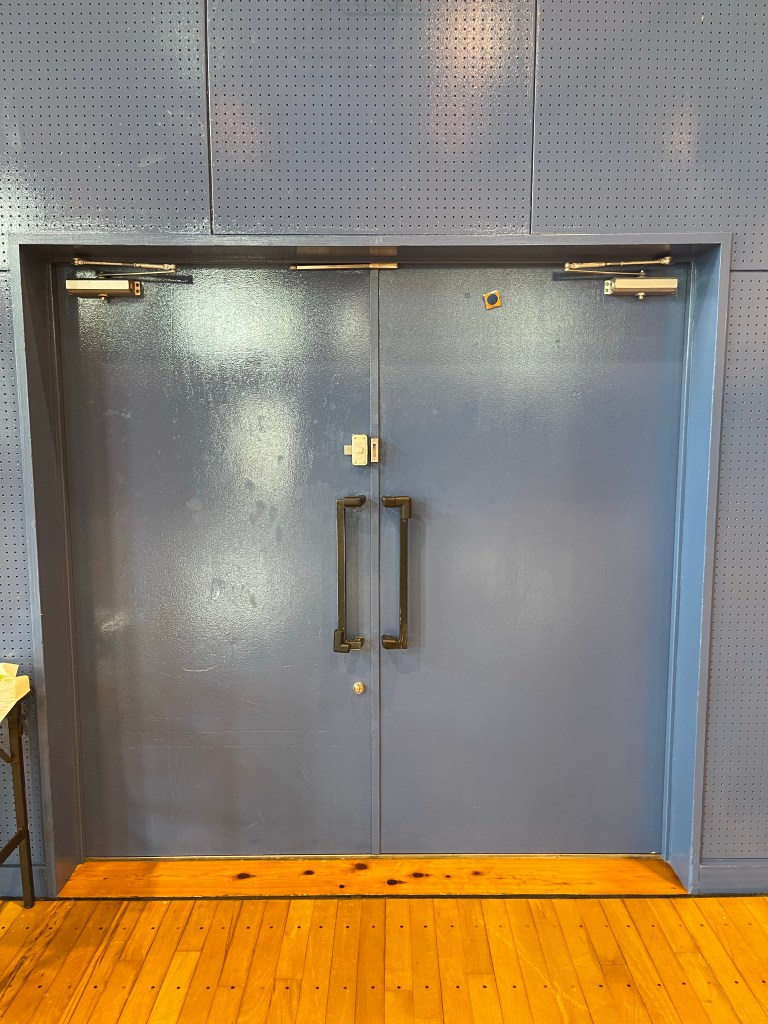
It’s not what the title suggests, this isn’t a reflection on how closed doors are big metaphor for leadership or my career. It is literally about closed doors. It is one of the things I have had the toughest adjustment with, knowing which doors open and how they open. I only smashed into a couple today, and that felt like a victory. Honestly, there is something great about starting to know a space and building well enough to move through it with confidence. On the other hand, there is nothing quite as demoralizing as leaving a room after a professional conversation to end up looking like a confused waiter on their first day.

It’s the one on the left…and I’m 90% sure it is a push…okay, 70%

Today was my busiest at in all of my roles, the teaching part was heavy today with lots of different pieces moving, but as I get back into teaching PHE and I get comfortable with the kids it becomes more and more fun. Today was a fun day with the kids. The leadership pieces were busy as well, it seems that every moment between lessons is filled with following up, planning and replying. I can understand how it is easy to get lost in the chasing and neglect the strategic and development focused aspects of the role. I am not sure how I am doing on those, but I am getting some good feedback about the chasing.

Tomorrow will be a good day, busy, but good. I’m looking forward to the chase.